2012 Trading World Champion Rankings
Published January 2013Top 5 Rankings
| Rank | Trader | Specialty | Notable Achievement |
|---|---|---|---|
| 1 | David Tepper | Distressed / Long-Short Equity | ~30% net return, highest-earning hedge fund manager of 2012 |
| 2 | Ken Griffin | Multi-Strategy | ~25% return, Citadel cleared high-water mark |
| 3 | Paul Skarp | Futures | 338% audited return, World Cup Trading Championship Futures champion |
| 4 | Carl Icahn | Activist / Event-Driven | Major activist wins including CVR Energy & Netflix |
| 5 | Thorsten Helbig | Forex | 69.7% audited return, World Cup Trading Championship Forex champion |
Profiles
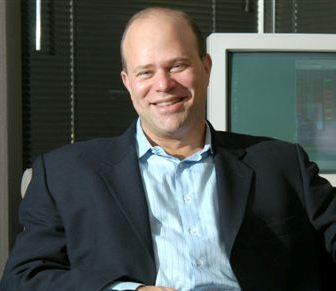
David Tepper is the inaugural Trading World Champion — the first trader to hold the title in what will become an annual recognition of the world's most outstanding trading performance. In 2012, Tepper's Appaloosa Management returned approximately 30% net of fees, a result that placed him well above both the S&P 500's 13.4% gain and the hedge fund industry average of roughly 6%. More importantly, that performance came on a massive asset base — Appaloosa managed approximately $15 billion during the year — making the achievement far more difficult to replicate than returns posted on smaller capital pools. Tepper was ranked as the highest-earning hedge fund manager of 2012 by both Forbes and Institutional Investor's Alpha, taking home an estimated $2.2 billion in personal income.
Tepper's core thesis in 2012 was characteristically direct: with central banks flooding the system with liquidity and both the Fed and ECB willing to act aggressively to prevent a deflationary outcome, risk assets were mispriced to the downside. While many managers spent the first half of the year hedging against a potential European collapse, Tepper leaned into US equities and distressed credit, betting that the policy backstop would hold. Draghi's "whatever it takes" speech in July validated the macro thesis, and the launch of QE3 in September reinforced it. Tepper's willingness to take large, concentrated positions when he identified what he considered asymmetric risk-reward was the defining feature of his 2012 campaign.
Appaloosa's roots are in distressed debt — Tepper founded the firm in 1993 after leaving Goldman Sachs, where he had run the junk bond desk. His legendary 2009 performance, when Appaloosa returned 117% by buying distressed bank stocks at the nadir of the financial crisis, had already established him as one of the most successful traders of his generation. The 2012 result was less dramatic in percentage terms but arguably more impressive in its consistency: delivering 30% on $15 billion in a year when most managers with comparable assets were struggling to beat cash.
What separated Tepper from other strong performers in 2012 was the combination of scale, audacity, and outcome. Many hedge fund managers produced solid returns on smaller asset bases. Some activist investors made brilliant individual trades. But no one matched Tepper's total package of absolute return, capital deployed, personal earnings, and willingness to take a clear, aggressive macro view when the consensus was uncertain. For inaugurating these rankings, there was no more fitting choice. Full article »
Ken Griffin's Citadel posted returns of approximately 25% in 2012 across its flagship Wellington and Kensington funds, capping one of the more remarkable comebacks in hedge fund history. In January 2012, Citadel's funds finally crossed their high-water marks, fully recovering the roughly 50% in assets lost during the 2008 financial crisis. That milestone meant Griffin could once again charge performance fees — the lifeblood of any hedge fund business — and the 25% return that followed demonstrated that the recovery was not merely a restoration of capital but a return to genuine alpha generation.
Citadel's multi-strategy model — deploying capital simultaneously across equities, fixed income, commodities, and quantitative strategies through semi-autonomous trading teams — was well-suited to a 2012 environment that rewarded diversification and risk management. While the macro backdrop was dominated by binary outcomes in Europe and US fiscal policy, Citadel's approach captured returns across multiple asset classes without requiring a single directional bet to carry the year. By the end of 2012, Citadel had cemented its position as one of the industry's elite platforms, managing over $14 billion and attracting top trading talent from across Wall Street. Griffin's 25% return on that scale of capital placed him firmly among the year's best performers.
Paul Skarp won the 2012 World Cup Trading Championships futures division with an audited return of approximately 338%, the highest verified trading result of the year in any major competition. The World Cup Trading Championship, administered by Robbins Trading Company since 1984, is the gold standard for verified trading performance — all participants trade real money through registered US brokers with full third-party auditing. Skarp's return was not an estimate or a marketing claim but a documented result, confirmed through the same regulatory infrastructure that governs professional futures trading in the United States.
Skarp finished well ahead of a competitive field that included Allen Swiontek of the United States at 86.4%, Jonathan C. Brum da Silva of Portugal at 60.1%, and Jan Smolen of Slovakia at 53.5%. The margin between first and second — more than 250 percentage points — was decisive and indicated sustained outperformance rather than a single fortunate trade. In a year defined by macro uncertainty, where many professional futures traders were whipsawed by the European crisis and shifting Fed policy expectations, Skarp navigated the volatility and produced a result that ranked among the best in World Cup Trading Championship history. This was the beginning of a World Cup Trading Championship career that would eventually span more than a decade.
Carl Icahn had one of the most productive years of his four-decade career in 2012, deploying his activist playbook across a series of investments that generated substantial returns. His most consequential move was acquiring roughly 10% of Netflix in the fall of 2012, when the streaming company was still reeling from the disastrous Qwikster rebranding and its stock was trading around $58 per share — an investment that would ultimately return more than 460% within 14 months. He also filed a 13D on CVR Energy in January 2012 at $23 per share, and by the end of the year the stock had roughly doubled. Additional positions in Forest Laboratories and Chesapeake Energy further demonstrated his ability to identify undervalued companies facing temporary dislocations.
Forbes ranked Icahn among the top five highest-earning hedge fund managers of 2012, with personal earnings exceeding $1 billion. While Icahn's approach — taking large stakes in underperforming companies and pressuring management for change — is fundamentally different from the strategies of the other traders on this list, the skill required to identify mispriced situations, size positions aggressively, and catalyze change is a form of trading in its own right. In 2012, Icahn's portfolio of activist bets produced a combination of realized and unrealized gains that placed him among the most successful capital allocators in the world.
Thorsten Helbig of Germany won the 2012 World Cup Trading Championships forex division with an audited return of 69.7%, the top verified forex result of the year. Based in Germany, Helbig traded major and minor currency pairs through a year that was dominated by European currency volatility — the euro/dollar pair swung dramatically as the sovereign debt crisis escalated and then abated following Draghi's intervention in July. Navigating those conditions required both technical precision and an understanding of the macro forces reshaping European monetary policy in real time.
The World Cup Trading Championship forex division, like the futures division, requires real-money accounts with full broker auditing, ensuring that returns are verified and not inflated. Helbig finished ahead of Richard Hom of the United States at 36.8% and Nick Ridley of the United Kingdom at 23.5%. A 69.7% audited return in currencies, over a full calendar year, against a competitive international field, is a strong result by any standard. Helbig would continue to compete in the World Cup Trading Championship in subsequent years, establishing himself as one of the more consistent European participants in the championship's forex division.
Rankings are editorial selections based on publicly available information as of Dec 2012. More info.