2013 Trading World Champion Rankings
Published January 2014Top 5 Rankings
| Rank | Trader | Specialty | Notable Achievement |
|---|---|---|---|
| 1 | David Tepper | Distressed / Long Equity | ~42% return, $3.5B personal earnings, top-earning hedge fund manager |
| 2 | Larry Robbins | Healthcare / Event-Driven | ~84% return, Glenview Capital Opportunity Fund, #1 on Bloomberg ranking |
| 3 | Carl Icahn | Activist Investing | IEP up ~80%, major wins in Netflix, Herbalife & Apple |
| 4 | Victoria Grimsley | Futures | 160% audited return, World Cup Trading Championship Futures champion |
| 5 | Thorsten Helbig | Forex | 53.1% audited return, World Cup Trading Championship Forex champion (repeat) |
Profiles
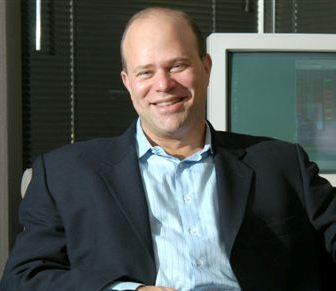
David Tepper delivered a roughly 42% return at Appaloosa Management in 2013, comfortably outpacing the S&P 500's 29.6% gain and dwarfing the 9.3% average hedge fund return. The result earned him an estimated $3.5 billion in personal income for the year, making him the highest-earning hedge fund manager on the planet for the second consecutive year according to Institutional Investor's Alpha Rich List. In a year when most professional money managers trailed a simple index fund, Tepper beat the index by double digits while running billions in capital — a feat that combined conviction, scale, and timing in a way that few others could match.
Tepper's thesis in 2013 was characteristically direct. He maintained large long positions in US equities, reasoning that with the Federal Reserve committed to quantitative easing and interest rates pinned at zero, equities were the only game in town. When the taper tantrum hit markets in May and June, many managers panicked and reduced exposure. Tepper held firm, recognizing that the Fed's actual tapering was still months away and that the selloff was a buying opportunity rather than a regime change. That willingness to stay long through turbulence — backed by a macro view that proved correct — was the defining edge of his 2013 campaign.
What separates Tepper from many of his peers is the scale at which he operates. Appaloosa managed approximately $17 billion in assets in 2013, making it one of the largest hedge funds in the world. Generating 42% on that capital base is fundamentally different from generating 42% on a $10 million account. The position sizes required, the market impact of entries and exits, the liquidity constraints — all of these factors work against large funds, which is why so many of them underperform as they grow. Tepper solved this problem through concentrated bets in large-cap, highly liquid names, particularly in the airline and financial sectors that were still recovering from the 2008 crisis.
By the end of 2013, Tepper had cemented his status as arguably the most successful hedge fund manager of the post-crisis era. His cumulative track record at Appaloosa, founded in 1993 with $57 million, showed annualized returns of roughly 30% gross over two decades. The $3.5 billion earned in 2013 alone was more than most hedge funds manage in total assets. In a year when the market itself was generous but most professionals still failed to keep up, Tepper did not merely keep pace — he set the pace. Full article »
Larry Robbins' Glenview Capital Opportunity Fund delivered an approximately 84% return in 2013, placing it first on Bloomberg Markets' annual ranking of best-performing large hedge funds. The result was driven by a contrarian thesis that few other managers were willing to embrace: that the Affordable Care Act would survive political opposition and create enormous value for hospitals, managed-care companies, and health insurers. While much of Wall Street dismissed Obamacare as politically unstable, Robbins went long Humana, Tenet Healthcare, and other ACA beneficiaries — and was vindicated when enrollment proceeded and hospital margins expanded sharply in the second half of the year.
The 84% return made Robbins one of the highest-performing fund managers of 2013 by percentage, outpacing nearly every peer on both an absolute and risk-adjusted basis. Glenview Capital managed approximately $7 billion in total assets by year-end, making the Opportunity Fund's result all the more significant — this was not a tiny fund taking reckless concentration risk, but a well-resourced operation with deep fundamental research behind each position. Robbins' ability to identify a secular theme early, build conviction-sized positions, and hold through the inevitable political noise that surrounded healthcare legislation in 2013 demonstrated exactly what event-driven investing looks like when executed at the highest level.
Carl Icahn had one of the best years of his four-decade-plus career in 2013. Shares of Icahn Enterprises rose approximately 80%, and his personal fortune expanded by billions through a series of high-profile activist campaigns that moved markets. His Netflix stake, acquired in late 2012, generated over $800 million in profit when he sold roughly half the position in October 2013. His Herbalife investment — taken in direct opposition to Bill Ackman's massive short position — more than doubled as the stock surged, netting Icahn an estimated $1.3 billion. And his aggressive push for Apple to expand its share buyback program drew global headlines, adding yet another dimension to a year of relentless deal-making.
Icahn's 2013 was a reminder that activist investing, at its best, is a form of trading that creates its own catalysts. Where most traders wait for the market to move, Icahn forced movement through public campaigns, board challenges, and shareholder proposals. The combined impact of his Netflix, Herbalife, and Apple positions alone generated billions in profit, and he was active in numerous other situations throughout the year. At 77 years old, Icahn was operating with the energy and aggression of someone decades younger, and 2013 was the year that made it impossible to dismiss him as a relic of a prior era.
Victoria Grimsley won the 2013 World Cup Trading Championships futures division with an audited return of 160%, becoming only the second woman in the competition's 30-year history to take first place. Based in Los Angeles, Grimsley traded futures contracts through a full calendar year that offered both trend and mean-reversion opportunities, capitalizing on the taper tantrum volatility in May and the strong equity rallies that bookended the year. The World Cup Trading Championship, administered by Robbins Trading Company since 1984, requires all participants to trade real money through regulated US brokers with full third-party auditing — making Grimsley's 160% a verified, documented result.
Grimsley's win was significant beyond the raw return. The World Cup Trading Championship futures division attracts serious traders from around the world, and the 2013 field was competitive. To finish first against that international group as only the second female champion in three decades of competition history made the result noteworthy on multiple levels. Her audited 160% placed her among the strongest World Cup Trading Championship winners in recent years and confirmed that the competition continues to surface talented traders who might otherwise remain unknown to the broader financial world.
Thorsten Helbig of Germany won the 2013 World Cup Trading Championships forex division with an audited return of 53.1%, earning his second consecutive World Cup Trading Championship forex title after winning the 2012 division with 69.7%. The 2013 currency market was defined by Abenomics — the Bank of Japan's massive monetary stimulus program sent the yen tumbling against virtually every major currency, creating some of the most powerful trend-following opportunities in the forex market in years. Helbig navigated these moves along with the volatility triggered by the Fed's taper tantrum, which caused sharp dislocations across dollar pairs in the second and third quarters.
Back-to-back World Cup Trading Championship forex titles is a rare accomplishment. While the 53.1% return was lower than his 69.7% in 2012, winning the division two years running against an international field demonstrated consistency rather than a single lucky year. The forex division of the World Cup Trading Championship demands the same real-money, fully-audited standards as the futures division, ensuring that returns are verified and not inflated. Helbig's repeat win established him as the dominant forex competitor of the early 2010s and set the stage for a multi-year World Cup Trading Championship career that would continue well into the next decade.
« 2012 Rankings | All Years | 2014 Rankings »
Rankings are editorial selections based on publicly available information as of Dec 2013. More info.